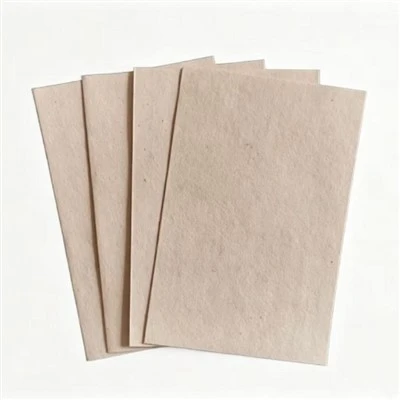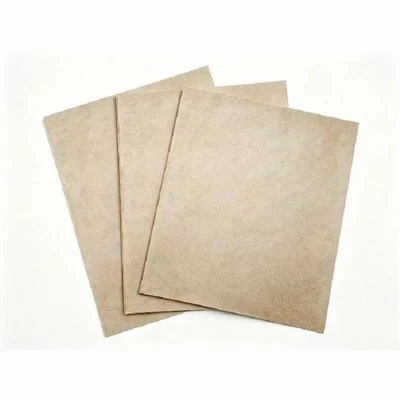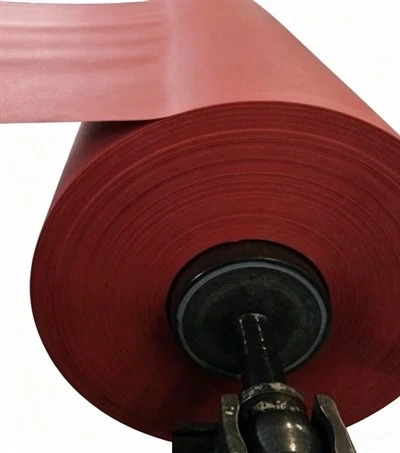


Agricultural carbon-enriching fertiliser mulch film is a biodegradable, functional paper mulch produced using a special papermaking process. It is made from a paper base of plant fibres such as straw, bamboo pulp and cotton stalks, blended with carbon-rich materials including rice husk charcoal, biochar and humic acid, and combined with biodegradable additives. Unlike ordinary paper mulch, this product contains its own carbon source and, as it degrades, simultaneously enriches the soil with carbon and improves soil quality. It combines three functions in one: weed control, moisture retention and soil improvement through carbon fertilisation. It leaves no plastic residue and can be ploughed directly back into the soil after crop harvest, without the need for collection.
Raw Material System
The main raw materials consist of plant fibres such as maize stalks, rice straw, wheat straw and bamboo pulp (accounting for 60%–85% of the pulp mixture), which are modified through microbial fermentation to remove lignin and produce pulp; the core carbon-enriching fillers are activated rice husk charcoal, straw biochar and potassium humate (accounting for 10%–25% of the dry material, providing a carbon reservoir).
Biodegradable reinforcing matrices: PLA (polylactic acid) and PHA (polyhydroxyalkanoate) emulsions, which enhance wet strength and resistance to rainwater leaching;
Functional additives include multifunctional agents such as moisture retention, anti-ageing, antibacterial, growth-promoting, waterproofing agents, and trace elements of nitrogen, phosphorus and potassium, tailored to meet the growth requirements of farmland.
Production Process
1. Modified fibre pulping stage
2. Formulation of carbon-enriched composite pulp
3. Casting / forming on a paper machine
4. Surface functionalisation and post-treatment
Single-sided coating with hydrophobic modified starch / chitosan: extends resistance to rainwater immersion;
Spraying of trace amounts of weed-suppressing and root-promoting nutrient solution: sustained-release nutrients during the seedling stage;
Embossed micro-porous treatment: regulates air and water permeability rates to suit both paddy fields and dry land.
5. Slitting, Rewinding and Finished Product Packaging
Cut to agricultural specifications (1 m, 1.2 m or 1.5 m widths), formed into agricultural rolls, and stored in moisture-proof, sealed packaging.
Core Product Characteristics
Exclusive carbon enrichment and soil improvement for sustained soil nourishment
The biochar and humic acid contained in the product are slowly released as it degrades, effectively increasing soil organic matter and cation exchange capacity, whilst alleviating soil compaction and salinisation issues; the pores in the biochar sequester soil nutrients, reducing the leaching of chemical fertilisers; it activates soil microorganisms and restores soil fertility, and continuous use over several years can reduce the need for organic fertiliser.
Fully Biodegradable, Zero 'White Pollution'
The product degrades naturally and completely, taking 60–120 days in dry fields and 45–60 days in the high-humidity environment of paddy fields to decompose fully. The degradation products-cellulose, biochar and humus-are all returned to the soil and converted into organic fertiliser, leaving no plastic micro-particles behind and eliminating the need for manual film collection.
Multi-functional agronomic benefits, tailored to crop growth
Provides heat and moisture retention, raising early spring soil temperature by 2–4 °C and reducing soil moisture evaporation by over 30 per cent, thereby enhancing drought resistance and protecting seedlings; the dense, carbon-based material blocks light and suppresses weeds, reducing the need for herbicides; Its inherent microporous structure allows for air and water permeability, preventing root asphyxiation and rot; the addition of a bio-based wet-strength additive ensures resistance to 30–60 days of sun exposure and light rain, perfectly aligning with the crop's seedling growth cycle.
Environmentally friendly and safe, suitable for organic farming
The raw materials consist entirely of natural agricultural and forestry waste; they contain no plasticisers or heavy metals, and no toxic substances are produced during the degradation process. The product complies with green agriculture standards and is suitable for use in organic farming operations and the cultivation of green agricultural produce.
Application Scenario
|
No. |
Application Scenario Category |
Core Application Scenarios |
|
1 |
Dryland cash crops (most common) |
1. Fruit and vegetable greenhouses: strawberries, tomatoes, cucumbers, chillies, watermelons; applying plastic mulch in early spring to increase temperature and suppress weeds, and ploughing after harvest to add carbon, thereby enhancing the sweetness and quality of the produce 2. Root and tuber crops: potatoes, sweet potatoes, ginger, garlic; weed control and moisture retention, soil aeration to promote tuber enlargement 3. Medicinal herbs: ginseng, notoginseng, astragalus; plastic residue-free; carbon-based mulch film improves soil quality in forest understorey and sandy cultivation soils |
|
2 |
Paddy field cultivation |
Simultaneous mulching with mechanised rice transplanting: Specialised thin carbon-enriching mulch film, laid simultaneously by the rice transplanter, suppresses paddy field weeds; upon degradation, the resulting carbon fertiliser enhances paddy field organic matter, reduces the burden of straw return and decomposition, and achieves a modest increase in yield per mu whilst improving the rice milling yield |
|
3 |
Nursery and seedling cultivation |
1. Covering for fruit tree seedlings and cuttings for landscaping 2. Understory agriculture: Cultivation of edible fungi and medicinal herbs under forest canopies; provides shade and retains moisture, whilst improving nutrient-poor forest soils |
|
4 |
Ecological restoration and specialised cultivation |
1. Improvement of saline-alkali and desertified land for cultivation: Carbon sources fix fertilisers, gradually restoring degraded farmland 2. Organic farms and export-oriented fruit and vegetable bases: meeting plastic-free and pesticide residue testing standards 3. Long-cycle field crops such as tobacco and cotton: use of thickened, long-lasting carbon-enriching mulch film, suitable for growing seasons of 90 days or more |
|
5 |
Recommended Methods of Use |
1. Manual film laying and ridge-forming with film coverage 2. Compatible with modified rice transplanters and integrated film-laying and sowing machines, enabling simultaneous film coverage during sowing or transplanting to save labour 3. After crop harvest, directly rotary till and bury the film; it will decompose naturally, eliminating the need for additional carbon-based fertiliser in the following season |
Comparison with ordinary paper mulch and plastic mulch
|
Specification |
Carbon-enriching fertiliser mulch film |
Ordinary straw-based mulch film |
PE plastic mulch film |
|
Soil improvement |
Releases biochar, enriches carbon and fertilises the soil |
Contains only organic matter; no long-term carbon sink |
No improvement; leaves behind pollution |
|
Degradability |
Fully degradable; turns into fertiliser |
Poor fertility; difficult to degrade; causes pollution from residual film |
|
|
Weed Suppression and Moisture Retention |
Excellent; the biochar layer provides good shading and heat absorption |
Excellent; poor air permeability |
|
|
Suitable Application Period |
45–120 days (adjustable); 30–90 days |
More than half a year; difficult to break down |
|
|
Crop Suitability |
Organic farming, high-standard fields, saline-alkali soils |
Ordinary open-field vegetables |
Ordinary arable fields; subject to environmental restrictions |

Agricultural carbon-enriching fertiliser and mulch film paper
Hot Tags: agricultural carbon-enriching fertiliser and mulch film paper, China agricultural carbon-enriching fertiliser and mulch film paper manufacturers, suppliers, factory