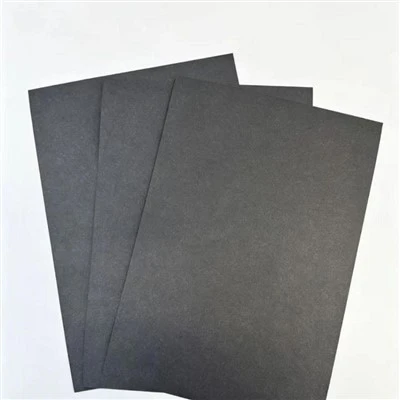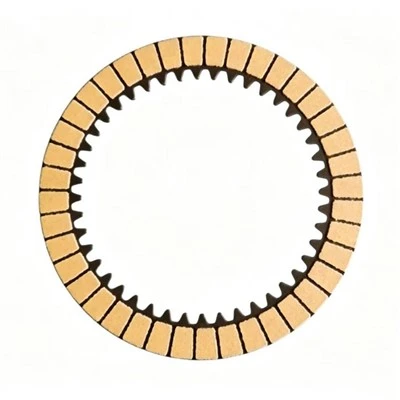

Wet paper-based friction plates show promising development prospects in the domestic market; demand continues to rise, driven by new opportunities in the new energy vehicle (NEV) sector and the trend of domestic substitution, while application areas continue to expand.
Sustained Growth in Market Demand
As core components of transmission systems, wet paper-based friction plates are widely used in passenger vehicles, commercial vehicles, construction machinery, and high-end agricultural equipment. It is projected that the market value for automatic transmission friction plates in my country will grow from RMB 7.469 billion in 2023 to RMB 10.743 billion by 2030, and further to RMB 13.465 billion by 2035.
New Opportunities Driven by New Energy Vehicles
Although the single-speed reducers currently dominant in battery electric vehicles (BEVs) do not require these friction plates, such reducers have inherent limitations; future advancements in BEV transmission technology may generate new demand for these components. In the hybrid vehicle sector, demand for wet paper-based friction plates is rising rapidly alongside increasing market penetration, with some companies seeing a swift year-over-year increase in the proportion of sales derived from the NEV sector.
Significant Potential for Domestic Substitution
Historically, the Chinese market for automatic transmission friction plates was largely dominated by US and Japanese companies. However, domestic enterprises have broken the long-standing monopolies and technical barriers held by overseas firms, successfully achieving domestic substitution. Having established stable supply relationships with major domestic automatic transmission manufacturers and OEMs, the pace of domestic substitution is expected to accelerate.
Expanding Application Areas
Beyond traditional sectors such as automobiles, construction machinery, and agricultural equipment, there is also demand for wet paper-based friction plates in specialized vehicles, marine vessels, and low-altitude aircraft-specifically within power-shift, continuously variable, electromechanical hybrid, and integrated hydrodynamic transmission systems-unlocking further market potential.