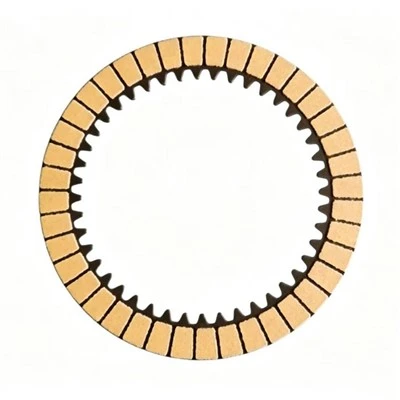

Wet paper-based friction discs are polymer composite materials manufactured through a precise process using fiber reinforcements, organic binders, and friction modifiers. Their core component-the base matrix-is typically made from base paper, hence the name "paper-based."
Fiber Reinforcements
The fiber reinforcements used in wet paper-based friction discs include options such as glass fiber, aramid fiber, and carbon fiber. Glass fiber, valued for its excellent wear resistance and cost-effectiveness, holds a significant place in the aftermarket sector. Aramid fiber stands out due to its superior high-temperature resistance, wear resistance, and efficient torque transmission capabilities. Carbon fiber-a fibrous material produced by heating organic fibers or low-molecular-weight hydrocarbon gases to high temperatures-offers high carbon content and numerous advantages; however, due to complex manufacturing processes and relatively high costs, it is primarily used in high-end products. The type and content of the fiber reinforcement directly influence the wear performance of the friction disc.
Binders
Binders used in wet paper-based friction discs fall into two categories. The first type consists of polymer materials that bond the paper-based material tightly to the core plate; their function is to prevent cracking or delamination during operation, ensuring stable performance. These binders require extensive bonding capability to maintain structural integrity, alongside excellent heat resistance, wetting ability, and adhesive strength.
The second type of binder cures to tightly link the fibers and friction modifiers within the paper-based material, creating a network structure. This binder must provide sufficient strength to withstand operating pressures while maintaining enough elasticity to prevent rigid impact when the friction disc engages with the mating steel plate.
Friction Modifiers
Friction modifiers play a crucial role in the manufacturing of paper-based friction discs. They not only enhance manufacturing processability and product quality but also ensure that the discs efficiently meet transmission requirements across various operating conditions. Factors such as the type, composition, particle morphology, and particle size of these modifiers have a profound impact on the performance of the friction disc. To achieve superior overall performance, multiple friction modifiers are typically used in combination rather than relying on a single component. This combined strategy enables paper-based friction discs to exhibit excellent frictional performance across a wide range of operating conditions.