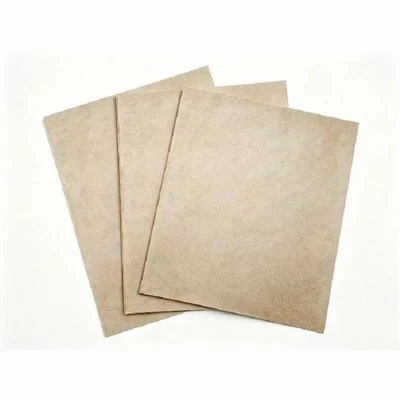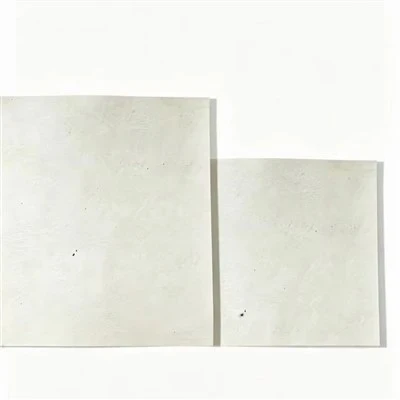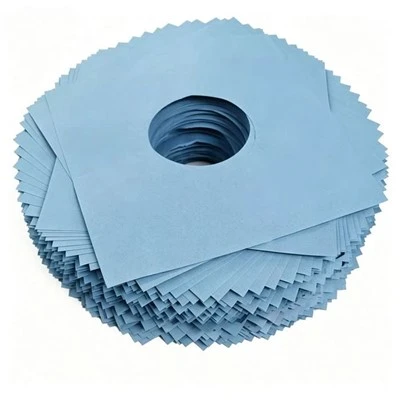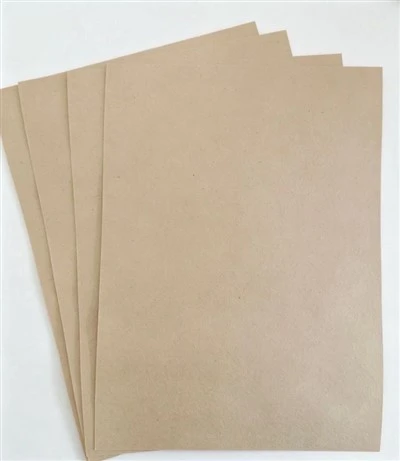


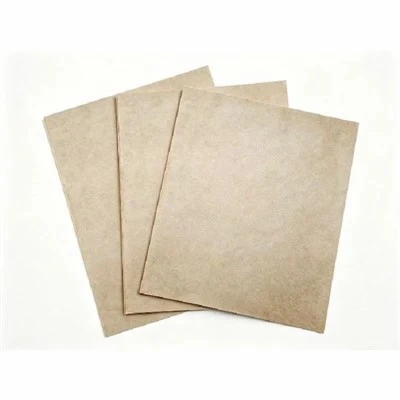
If you’ve ever walked through a PCB manufacturing facility, you might have noticed the stacks of smooth, brown kraft paper used as a critical intermediate layer in the hot-pressing stage of circuit board production. As a supplier of PCB Hot-pressed Kraft Paper, I get asked one question more than any other by engineers, production managers, and quality control teams: “What’s the flammability rating of your PCB hot-pressed kraft paper?” It’s a fair question—PCB production involves high temperatures, pressure, and flammable resin systems, so knowing how materials perform under heat isn’t just a specification, it’s a safety and reliability necessity. Let’s break down exactly what that rating means, how we test it, and why it matters for your line.
First, let’s set a baseline: when we talk about flammability in the context of PCB materials, we’re not talking about regular household kraft paper. Our PCB Hot-pressed Kraft Paper is engineered specifically for the PCB process, with a lot more going into its composition than the paper you use for gift wrapping. Unlike standard kraft paper, which is prone to igniting at relatively low temperatures, our product is treated and formulated to meet strict industry standards that govern how it reacts to flame and sustained heat.
To get to the rating, we have to talk about the tests that define PCB flammability standards. The two most widely used for this application are UL 94 and IEC 60695. UL 94 is a set of tests from Underwriters Laboratories that categorize plastic and composite materials based on how they burn after a small flame is applied. IEC 60695 is the international equivalent, used for global compliance, so it’s important to note that our materials meet both for customers serving North American and European markets.
For our PCB hot-pressed kraft paper, the flammability rating we offer is UL 94 V-0, the highest rating for thin, rigid, or flexible materials used in electrical applications. Let me explain what that actually means, because there’s a lot of confusion about what V-0 entails. When a sample of the material is subjected to a 20mm flame for 10 seconds, the total burn time after removing the flame must be less than 10 seconds. Also, no flaming drips are allowed—those drips would be dangerous because they could fall onto other components or materials in the press, causing secondary fires. Finally, the sample can’t burn all the way up to the hold clamp, and there’s no glowing that lasts longer than 30 seconds after the flame is removed. That’s a high bar, and it’s one we’ve tested against hundreds of times over the years as a supplier.
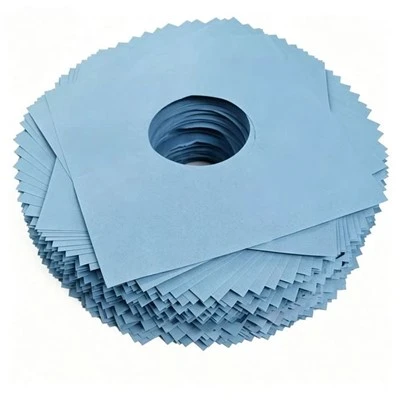
I should clarify that sometimes people mix up the rating for interlayer kraft paper vs. the final hot-pressed board. Our PCB Hot-press Interlayer Paper has the same core flammability formulation as the final hot-pressed kraft paper we supply for the board’s core layer. The interlayer paper is the sheet placed between layers of copper foil and prepreg during the hot-press cycle to prevent adhesion between unwanted layers and control resin flow, so it’s exposed to the same high temperatures as the final core material. That means its flammability performance is identical, which is important because if the interlayer catches fire during pressing, it can ruin an entire batch of boards and create a safety hazard for your team.
Now, why does this matter beyond just passing a test? Let’s talk about real-world performance in a PCB production line. When you’re running a hot-press cycle, temperatures typically range from 170°C to 180°C (338°F to 356°F) for standard FR-4 boards. That’s way below the ignition temperature of our PCB hot-pressed kraft paper, which is around 240°C (464°F). That gap is critical—it means that under normal operating conditions, the paper won’t ignite, even if there’s a minor temperature spike in the press. We’ve also tested for sustained heat exposure at 200°C for 72 hours, and the material shows no signs of charring, warping, or losing its structural integrity, which would be a problem if the paper started breaking down and releasing flammable gases.
I’ve seen what happens when a material doesn’t have a solid flammability rating. Early in my career as a materials engineer, I worked with a supplier that used standard kraft paper for interlayers in a prototype PCB line. During a press cycle that had a minor temperature control error, the paper ignited, melting the copper foil, warping the glass fiber layers, and shutting down production for three days. The cost wasn’t just the ruined boards—it was the lost time, the cleanup, and the safety review that followed. That’s why we invest in testing every batch of our PCB Hot-pressed Kraft Paper to ensure it meets that UL 94 V-0 rating, no exceptions. We don’t cut corners on formulation or testing because we’ve seen the cost of doing it wrong.
It’s also important to note that flammability ratings aren’t one-size-fits-all. Some applications require a slightly different formulation, even if the core rating stays the same. For example, if you’re manufacturing high-frequency PCBs that require tighter dimensional stability, we can adjust the kraft paper’s resin content to maintain the V-0 rating while improving dimensional control. We work closely with our customers to understand their specific production conditions, press temperatures, and end-product requirements to make sure the material we supply isn’t just flammability-compliant, but optimized for their line.
I get questions too about how the hot-pressing process affects the flammability rating. After all, the paper is pressed at high temperature and pressure with resin, so does that change its performance? The short answer is: no, not when it’s our material. Our PCB hot-pressed kraft paper is treated during manufacturing with flame-retardant additives that are bonded into the cellulose structure, not just coated on the surface. That means during the hot-press cycle, the additives don’t leach out or degrade—they remain in the paper, so the final pressed board’s core has the same V-0 rating as the raw paper we supply. We test both raw material and pressed samples side-by-side to confirm this, which is why we’re confident in our claim.
Another point to clarify: sometimes people confuse flammability rating with “non-flammable.” No material is truly non-flammable, but a V-0 rated material is self-extinguishing. That means if a small flame is applied to it, it will stop burning as soon as the flame is removed, without producing flaming drips. For PCB production, that’s exactly what you want—if there’s a rare event where a spark or small flame comes into contact with the paper during pressing, it won’t spread. The other ratings, like V-1 or V-2, are lower, with longer burn times and allowed flaming drips, which aren’t acceptable for high-volume PCB manufacturing where fire safety is a top priority.
Let’s talk about how we test our materials, because transparency is important. We send every new batch of PCB Hot-pressed Kraft Paper to an independent, third-party testing lab that’s accredited for UL 94 and IEC 60695. We don’t do in-house testing, because third-party validation is what gives our customers confidence. The lab runs the exact protocols I mentioned earlier: applying a 20mm flame for 10 seconds, measuring burn time after flame removal, checking for drips, and verifying that the material doesn’t burn past the hold clamp. We keep copies of all test records on file and provide them to customers on request, so you can be sure the material you’re getting meets the spec.
Now, let’s connect this to the role of our PCB Hot-press Interlayer Paper in the process. The interlayer is a thin, flexible sheet that goes between each layer of the PCB stack-up. Its job is to prevent unintended adhesion between copper foil and prepreg layers during pressing, and to control the flow of resin so that the board’s dimensions stay consistent. Because it’s exposed to the same heat and pressure as the core kraft paper, it needs the same flammability performance. We’ve formulated our interlayer paper to have the same UL 94 V-0 rating, so whether you’re using it for a 2-layer or a 20-layer board, every component of the stack-up is protected against flame.
I know that for production teams, spec sheets can be confusing, full of jargon that doesn’t always translate to real-world performance. When a customer asks for our flammability rating, I don’t just say “V-0”—I walk them through what that means for their line. For example, if you’re running a press that cycles 24/7, you don’t have to worry about a small temperature spike causing a fire. If you’re working with high-volume lines where a single batch of ruined boards can cost tens of thousands of dollars, you can trust that our material won’t ignite and ruin your day. That’s the value of a consistent, tested flammability rating—it’s one less thing you have to worry about when you’re managing a tight production schedule.
I’ve also worked with customers who are in industries with strict regulatory requirements, like automotive or aerospace, where PCB flammability is governed by ISO standards. Our material meets not just UL 94 V-0, but the IEC 60695-11-10 standard as well, which is required for many European and aerospace applications. We keep up with these changing standards, and we update our formulations and testing to stay compliant, so our customers don’t have to scramble to switch materials when a new regulation comes out.
Let’s address a common misconception: some engineers think that adding flame retardants to kraft paper will affect its mechanical properties, like tensile strength or flexibility, which are important for handling in the press. That’s not the case with our material. We’ve balanced the flame retardant formulation to maintain the high tensile strength needed to be pulled through the press stack-up, as well as the flexibility to conform to even the most complex board designs. We test tensile strength and elongation at break on every batch too, so our material doesn’t just pass flammability tests—it works for your production process.
If you’re shopping for PCB hot-pressed kraft paper, I encourage you to ask for the flammability test records. Any supplier can claim a rating, but actual third-party test data is what separates the reliable ones from the ones that cut corners. When you request samples from us, we include a full copy of the latest flammability test report, as well as data on tensile strength, resin content, and dimensional stability, so you can test the material on your own line before making a commitment. We’ve had customers switch from other suppliers after finding that our material not only has a solid flammability rating, but also improves their press cycle consistency and reduces layer misalignment.
At the end of the day, the flammability rating of PCB hot-pressed kraft paper is more than just a line on a spec sheet—it’s a critical part of keeping your production line safe, reliable, and profitable. When you choose a material with a proven UL 94 V-0 rating, you’re reducing the risk of fires, minimizing the chance of ruined batches, and ensuring that your boards meet the regulatory requirements of your market. If you have questions about our PCB Hot-pressed Kraft Paper or PCB Hot-press Interlayer Paper, or if you’d like to request samples or discuss your specific production needs, we’re here to help. We’ve worked with PCB manufacturers of all sizes, from small prototype shops to large high-volume producers, and we’re ready to find the right solution for your operation. Don’t hesitate to reach out to start the conversation about how our materials can support your line’s safety and performance.
References
UL 94 Standard for Safety for Flammability of Plastic Materials for Parts in Devices and Appliances, Underwriters Laboratories, 2020.
IEC 60695-11-10:2019, Fire hazard testing — Part 11-10: Test flames — 20 mm vertical flame test method, International Electrotechnical Commission, 2019.
PCB Manufacturing Process Fundamentals, IPC Association Connecting Electronics Industries, 2021.
Flammability Properties of Cellulose-Based Electrical Insulation Materials, Journal of Applied Polymer Science, Vol. 128, No. 3, 2013, pp. 1689–1695.