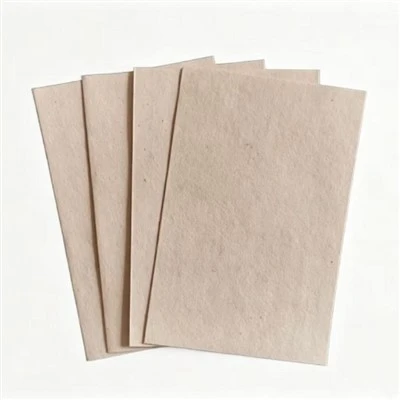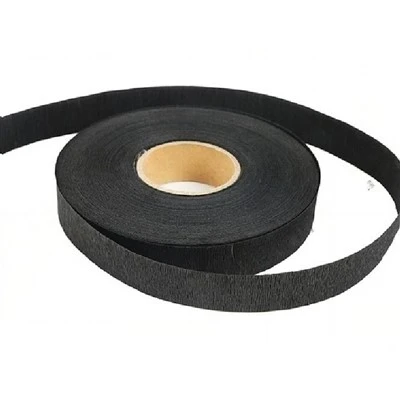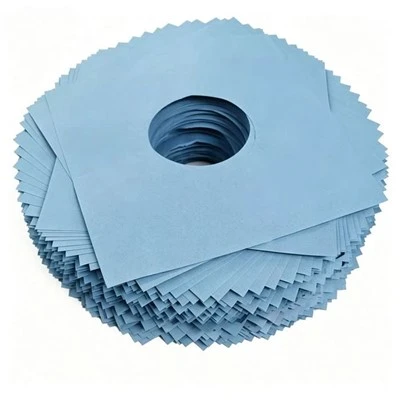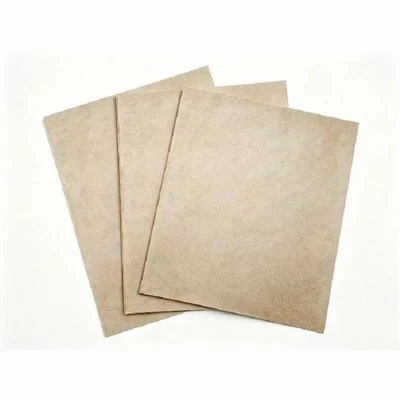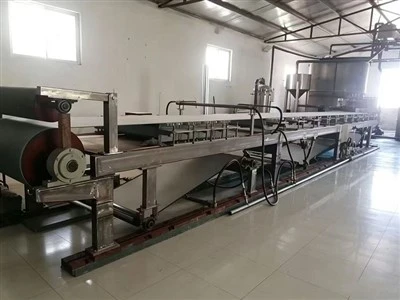


Production Process: Anti-static packaging paper is primarily manufactured on specialised paper production lines using two main technical approaches: the addition of anti-static materials to the pulp during papermaking (the 'mixing' method) and the application of anti-static materials to the surface of the finished paper (the 'coating' or 'lamination' method).
1.Mixing Method (Internal Long-Lasting Anti-Static Treatment) Raw material preparation: High-purity coniferous wood pulp or long polyester fibres are selected, soaked and defibred, then pulped to approximately 40°SR. After achieving equilibrium moisture content, conductive components are added: conductive fibres (such as stainless steel fibres or carbon fibres), carbon black / metal oxide conductive particles, or cationic antistatic agents, to ensure uniform dispersion. Forming: The mixed pulp is sprayed onto a forming wire to form a wet sheet, which is then mechanically pressed to remove water and dried in multiple drying cylinders. Post-processing: Calendering, slitting, and in-line inspection of surface resistance uniformity. Coating / Laminating Method (Surface Functionalisation)
2. Coating / Laminating Method (Surface Functionalisation) Substrate pretreatment: After the base paper is unwound, it undergoes corona treatment to enhance surface adhesion. Functional layer coating: Using a roll-to-roll continuous process, the following layers are applied sequentially: a primer (to enhance adhesion), a conductive anti-static layer (containing conductive materials such as polythiophene and carbon nanotubes), and, for some products, an additional waterproof / anti-rust coating. Curing and winding: Cured via infrared or hot-air drying, with tension-controlled winding; surface resistance and thickness deviation are monitored online throughout the process
Product Characteristics and Technical Standards
1. Classification of Core Anti-static Performance
|
Performance Grade |
Surface Resistance Range |
Electrostatic Dissipation Time |
Suitable Applications |
|
Conductive Grade |
10³~10⁵Ω |
<0.1 seconds |
Flammable and explosive environments, power batteries, highly sensitive chips |
|
Anti-static Grade (Mainstream) |
10⁶~10⁹Ω |
≤0.5 seconds |
General electronic components, precision assemblies |
|
ESD-resistant Grade |
10⁹~10¹¹Ω |
≤2 seconds |
Low-sensitivity products, general industrial packaging |
2. Environmental friendliness: Most products are recyclable, sulphur-free and halogen-free, and comply with the RoHS Directive
Areas of Application
|
No. |
Application Sector |
Market Share |
Key Application Scenarios |
Representative Products |
|
1 |
Electronics and Semiconductor Industry |
47% (largest application scenario) |
Isolation and packaging of chips, wafers, PCBs, sensors and LCD panels to prevent device failure caused by electrostatic discharge |
Sulphur-free anti-static paper (for semiconductors), wafer isolation paper |
|
2 |
Precision Manufacturing and Optics |
- |
Protection of optical lenses, camera modules, precision bearings and precision aerospace components to prevent dust adhesion and surface scratches caused by static electricity |
- |
|
3 |
Medical and Pharmaceutical Industry |
- |
Packaging of medical electronic devices, sterile medicines and diagnostic reagents, meeting dual requirements for cleanliness and anti-static properties to prevent particle contamination caused by static electricity |
- |
|
4 |
Aerospace, defence and explosion-proof applications |
- |
Packaging for military electronic components, ammunition and flammable and explosive chemicals; conductive-grade products rapidly dissipate static electricity, eliminating the risk of static-induced detonation |
- |
|
5 |
Other application scenarios |
- |
1. Packaging for electronic component desiccants (breathable and anti-static), anti-rust and anti-static packaging for hardware and automotive parts, and protective packaging for the transport of new energy battery components 2. Anti-static printing paper and laboratory record paper for electrostatic-sensitive sectors such as office supplies, science and education, and laboratory experiments, to prevent paper jams or the adsorption of experimental impurities caused by static electricity 3. Cushioning inner packaging for electrostatic-sensitive small items in courier and logistics services |
- |
Product Specifications and Dimensions: Customised production is available.
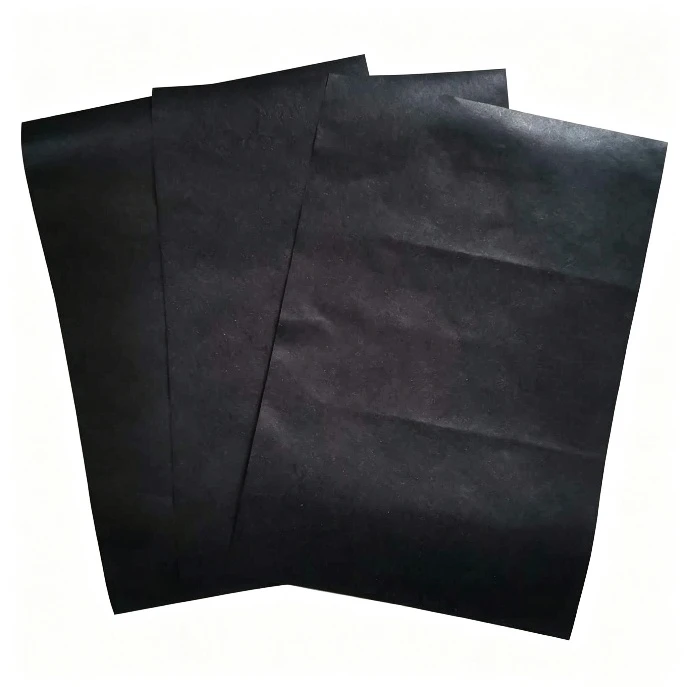
Anti-static packaging paper
Hot Tags: anti-static packaging paper, China anti-static packaging paper manufacturers, suppliers, factory, industrial kraft wrapping roll paper, industrial tissue wrapping paper, industrial wrapping material, machine glazed kraft paper, product packaging wrapping paper, wrapping paper sheet