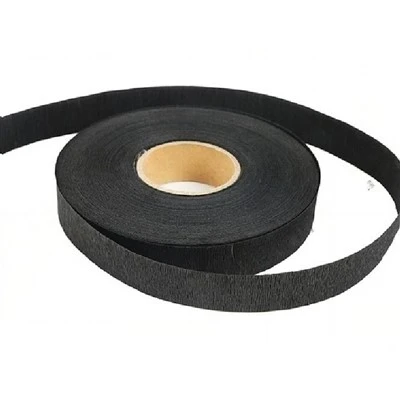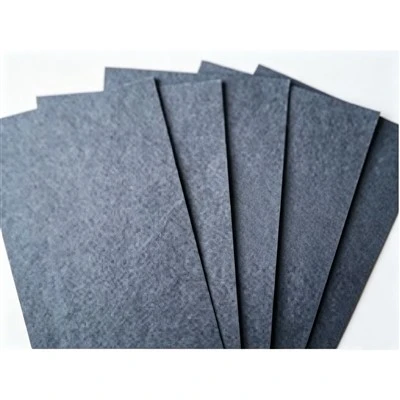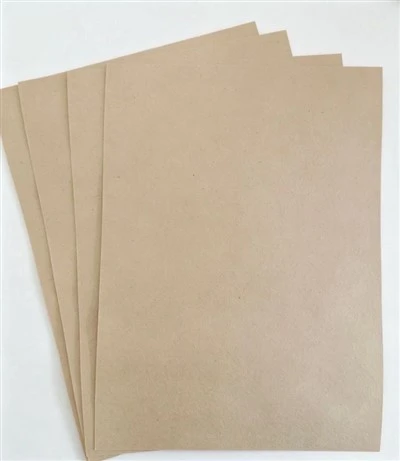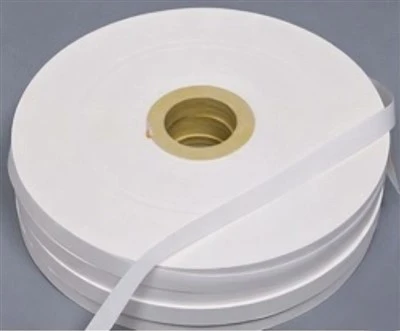

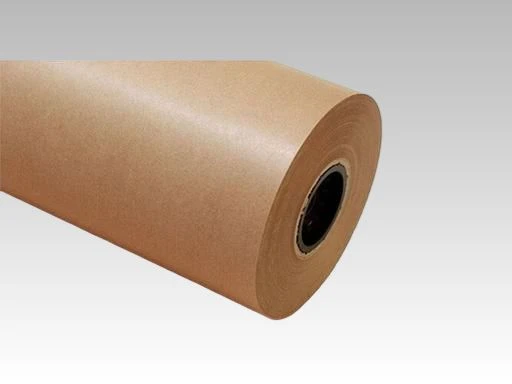
Applicable standard: GB/T 7969-2023 'Paper for Cables', which serves as the core insulating medium for oil-immersed power cables, telecommunications cables and special high-voltage cables; it is commonly known as cable paper or electrical insulating paper.

Basic Raw Materials (purity requirements far exceed those of ordinary paper)
1. Main Material: 100% unbleached sulphate softwood insulation pulp, α-cellulose ≥92%, ash content (≤0.3%); metal ions such as iron and copper are strictly controlled to prevent partial discharge and electrochemical corrosion under high voltage. High-end, high-temperature-resistant variants: These also require the addition of cotton linter pulp and aramid/polyester synthetic fibres, for use in specialised high-temperature cables for locomotives and the metallurgical industry.
2. Water: Deionised and softened water is used throughout the process to prevent contamination of the pulp by calcium and magnesium ion impurities.
3. Additives: No ordinary papermaking fillers or fluorescent brighteners are used; only a small amount of neutral retention aids is added, which do not affect electrical performance.
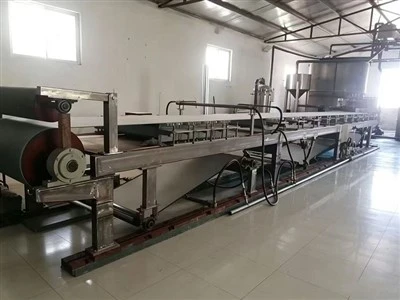
Production Process (Long-wire Speciality Paper Machine)
1. Pulp Purification and Preparation (determines insulation performance)
1) Disintegration: Gentle pulping to avoid severing long fibres;
2) Multi-stage impurity removal to thoroughly eliminate metal particles and bark impurities;
3) High-freedom refining to ensure strength and pore oil-holding capacity;
4) Acid purification (for high-end, high-pressure paper): soaking and washing with dilute hydrochloric acid to remove metal ions from within the fibres;
5) Uniform maturation in the pulp mixing tank to stabilise pulp concentration for use.
2. Long-wire Forming Key points of the forming process: balanced longitudinal and transverse fibre distribution, and a fine, uniform pore structure to ensure consistent oil impregnation.

Key Product Characteristics (categorised into three main areas: electrical, physical, and chemical/thermal stability)
(I) Electrical Insulation Properties (Core Value)
1. High breakdown strength: ≥50 kV/mm when oil-impregnated; withstands high-voltage electric fields of 10 kV to 500 kV after multi-layer winding;
2. Extremely low dielectric loss (tanδ): ≤0.003–0.004 at 70 °C and 50 Hz, reducing cable heating and power loss, and suitable for ultra-high-voltage direct current transmission;
3. High volume resistivity: ≥1×10¹³ Ω·cm, blocking leakage paths;
4. Uniform microporous oil-retaining structure: oil absorption rate > 30 mm/10 min; after impregnation with transformer oil, it forms a stable oil-paper composite insulation system that suppresses partial discharge.
(II) Physical and Mechanical Properties (Suitable for High-Speed Winding)
1. High strength: longitudinal tensile strength ≥ 4.5 kN/m, transverse ≥ 2.8 kN/m; does not fracture during high-speed winding;
2. High fold resistance and good flexibility: Can be tightly wound in multiple layers around conductors and stranded wires; adheres to uneven surfaces without fuzzing or powder shedding;
3. Controllable density of 0.9–1.1 g/cm³, with thickness specifications ranging from 50 μm to 300 μm for full coverage;
4. Dimensional stability: Low shrinkage after heating or oil impregnation; no delamination or slippage during long-term operation.
(III) Chemical Stability Characteristics
1. Low ash content and free of free metal ions; no impurities leach out during long-term oil immersion;
2. Resistant to transformer oil, mineral oil and cable impregnating agents; does not swell or degrade;
3. Weakly neutral pH; does not corrode copper conductors or lead sheaths.
Product Categories and Corresponding Applications
Standard low-voltage cable insulation paper (50–130 μm)
Applications: Oil-immersed power cables, control cables and local telephone cables rated at 10 kV and below;
Function: Main insulation for conductors and isolation between wire pairs, preventing signal crosstalk and electrical leakage.
High-Voltage / Ultra-High-Voltage Cable Insulation Paper (150–300 μm, low-dielectric-loss formulation)
Applications: 35 kV, 110 kV, 220 kV and 500 kV phase-separated lead-sheathed oil-filled cables, and submarine power transmission cables;
Processing stage: Multi-layer primary insulation winding applied to the outer side of the conductor shield; this serves as the core material ensuring the cable's withstand voltage capability.
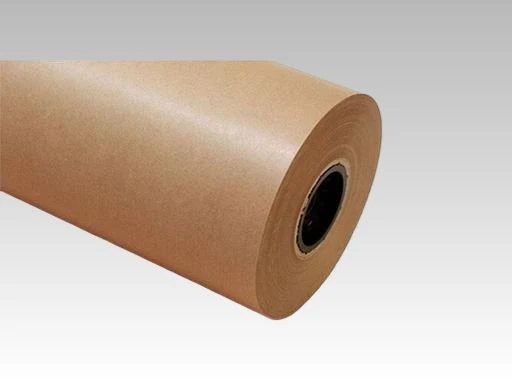
Cable insulation paper
Hot Tags: cable insulation paper, China cable insulation paper manufacturers, suppliers, factory