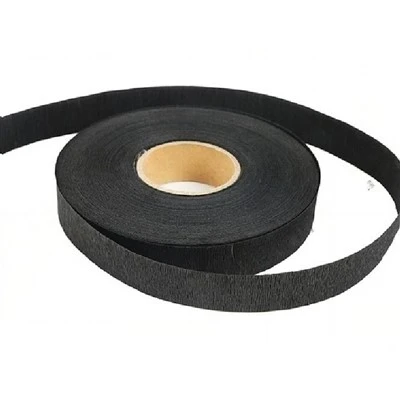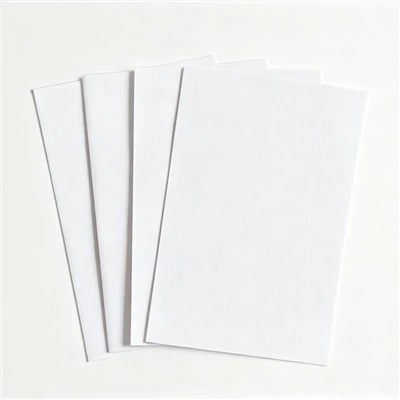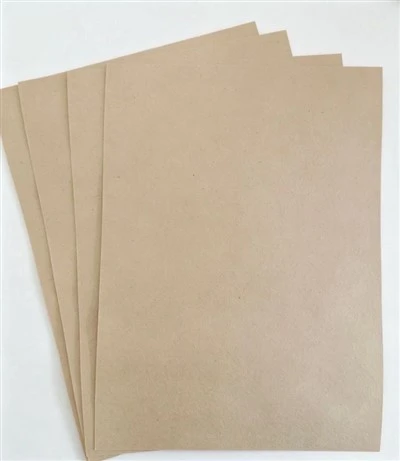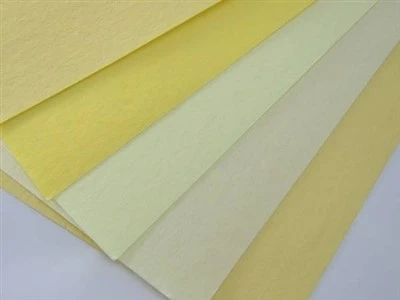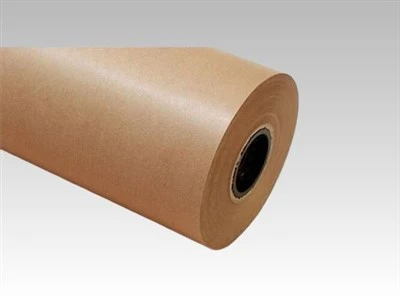

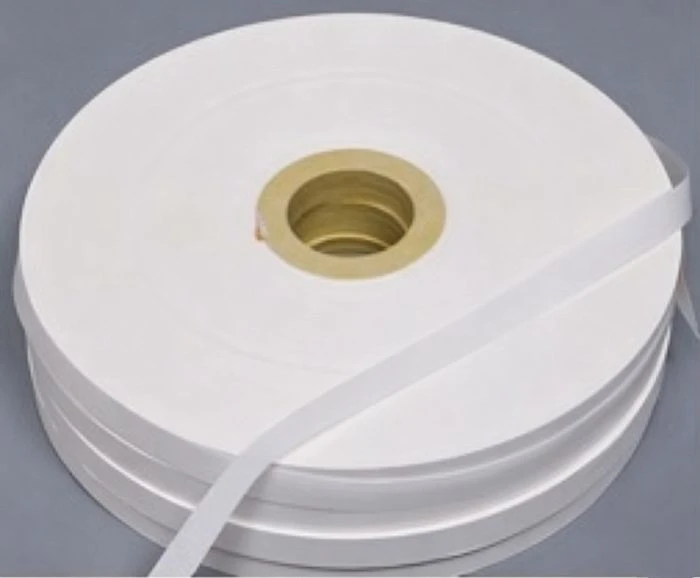
Cable cotton paper (cable cotton paper tape) is a cellulose-based insulating filler wrapping paper specifically designed for the cable industry. Made from cotton pulp, it contains no fillers and is not sized with rosin; instead, it relies on the interwoven pure cotton fibres to provide insulation, cushioning and filling functions. It is a core auxiliary material for power, control and telecommunications cables.
Production Process (manufactured on a special paper machine for wet-process insulating paper)

1. Raw Material Proportions and Pulping/Paper Making
(1) High-end insulation type: 100% cotton pulp; the cotton fibres enhance heat resistance and tensile strength, making it suitable for high-voltage oil-filled cables. No fillers or rosin sizing are added at any stage; a small amount of wet-strength agent is added to improve strength after immersion in water. (2) Formed via wet-forming on a specialised long-wire paper machine, with the moisture content of the wet paper controlled at around 75% to prevent insulation defects caused by localised variations in thickness. (3) Calendering, slitting and rewinding • Hot-press calendering: eliminates paper warping to ensure a smooth, even fit during wrapping; • Precision slitting: slitting widths customised to requirements (5–1000 mm), with clean edges and no fibre shedding;
2. Functional Modification (Specialised Post-Treatment for Specialty Cables)
(1) Water-blocking cable cotton paper: Coated with superabsorbent polymer (SAP) prior to drying; swells rapidly upon contact with water to block water ingress; (2) Oil-resistant impregnated cotton paper: Features a low-permeability, high-oil-absorption structure, suitable for oil-filled cables; (3) Flame-retardant cotton paper: Impregnated with environmentally friendly phosphorus-based flame retardants, without compromising electrical performance;
3. Comprehensive factory testing: Thickness, basis weight, longitudinal and transverse tensile strength, elongation at break, breakdown voltage, air permeability, ash content, moisture content and oil absorption rate are all tested. Products may only be released from stock upon compliance with IEC 60544 and the Chinese national standard for power cable insulation paper.

Product Characteristics
1. Electrical Insulation Properties (Core Advantages)
• Pure cellulose, low ash content, free from conductive impurities, uniform dielectric constant, and stable breakdown voltage;
• Suitable for long-term immersion in mineral insulating oil; insulation strength is significantly enhanced after impregnation, making it suitable for oil-filled high-voltage cables;
• Isolates conductors, reducing crosstalk and leakage current between pairs, and serves as a substitute for some plastic films used as auxiliary insulation.
2. Mechanical and Physical Properties
• Soft and highly resilient, with tensile strength ≥ 15–20 N/cm; does not tear or break during high-speed cable winding;
• Loose, cushioned texture; when used to fill multi-core twisted conductors, it ensures a uniform cross-section of the cable core, reducing stress concentration;
• High-temperature resistance: does not melt, become brittle or adhere to rubber/XLPE insulation layers during brief exposure to 200°C;
• Low density, approximately 50% lighter than PP filling tape, reducing the overall weight of the cable.
3. Standard Specifications
• Thickness: 0.03 mm, 0.04 mm, 0.05 mm, 0.06 mm, 0.075 mm, 0.10 mm, 0.125 mm;
• Basis weight: 22–60 g/m²;
• Appearance: Natural off-white colour, free from holes, dust and lumps.
4. Five Key Functions
1). Gap Filling: Fills the uneven gaps between the strands in multi-core cables, ensuring the cable core is circular and saving sheathing material; 2). Isolation and Cushioning: Provides isolation between conductors and between the insulation and shielding layers, whilst cushioning against scratches during bending and compression;
3) . Supplementary Insulation: Provides supplementary insulation for low-voltage and control cables, enhancing dielectric strength;
4). Oil Absorption and Retention: Stores insulating oil in oil-filled cables, ensuring continuous saturation of the insulation layer;
5). Water Barrier and Moisture Protection: Modified water-barrier cotton paper blocks the longitudinal diffusion of moisture.
Application Scenarios
Power Cables (Largest Market in Terms of Volume)
1. Medium- and low-voltage power cables (0.6/1 kV–35 kV): YJV, VV and YJV22 multi-core copper and aluminium power cables, in which the cable cores are twisted and then wrapped with filler material to round off the core and provide cushioning and protection; standard equipment for distribution boards and power cables in industrial premises.
2. Oil-filled high-voltage paper-insulated cables (PILC): 110 kV/220 kV oil-immersed cables, featuring multi-layer cotton paper winding as the primary insulation, which relies on the cotton paper to absorb the insulating oil; used in substations and for long-distance underground power transmission.
3. Mining and flame-retardant power cables: Flame-retardant modified cotton paper for cable insulation, used for filling and wrapping in fire-resistant cables for underground mines and tunnels.
Control and Instrumentation Cables KVV and KVVP shielded control cables:
provide isolation between multi-core signal lines to reduce electromagnetic crosstalk; the shield is wrapped on the inner side to prevent the copper tape from scratching the insulation; widely used in industrial control, building automation and equipment connection cables.
Telecommunications and Signal Cables
1. Local telephone cables, network cables and RF coaxial cables: isolate wire pairs, balance impedance and reduce signal interference;
2. Composite cables for optical fibre systems: provide layered isolation and filling for optical fibre cables and power lines within a single cable.
Special-purpose cables
1. Water-blocking and waterproof cables:
2. Cables for oil wells and high-temperature equipment:
3. Photovoltaic and energy storage cables:
Applications in electrical equipment, such as inter-layer insulation for transformer windings, wrapping of motor lead wires, and insulating lining paper for capacitors; these all fall under the category of cable cotton paper-derived insulating paper applications.

Cable wrapping paper
Hot Tags: cable wrapping paper, China cable wrapping paper manufacturers, suppliers, factory, cable insulating kraft paper, copper wire insulation paper, electrical winding insulation paper, insulating kraft paper, oil paper cable insulation material, power cable paper